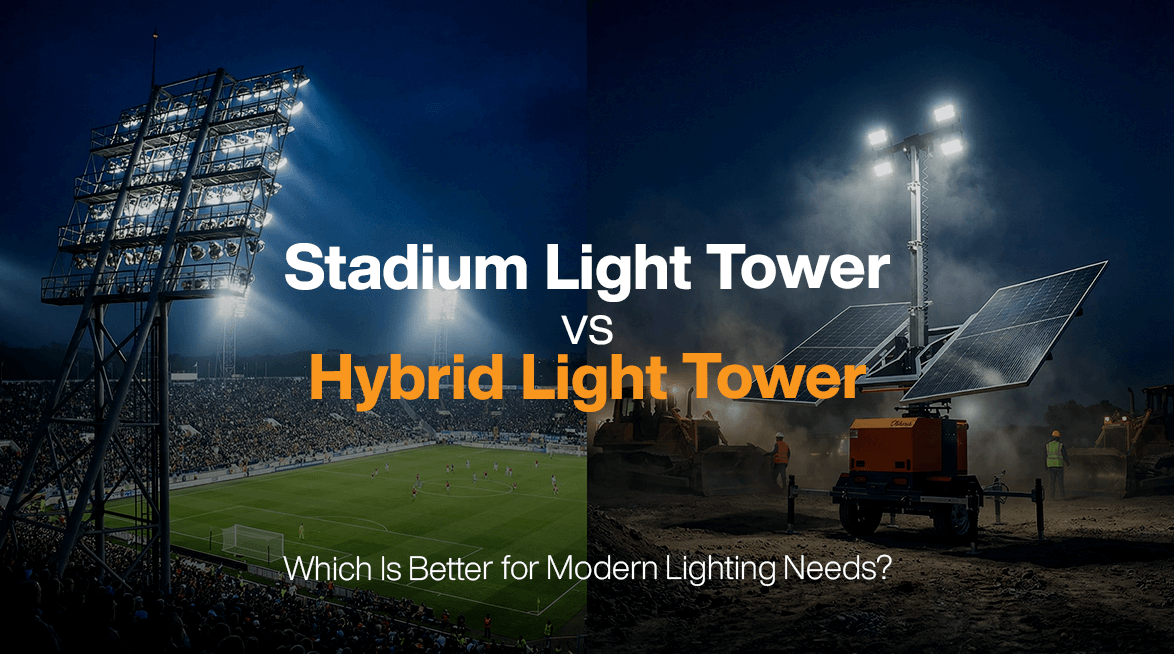
Infrastructure today does not just require lights. It requires accuracy, efficiency, sustainability, and flexibility. It could be a night cricket tournament, a football league, a concert, or a construction, but nowadays, lighting systems should provide high lux levels without running out of control on operational costs and environmental footprint.
Over the years, stadium light tower has been the main provider of high-capacity event lighting. However, the emergence of hybrid technology has offered a compelling substitute. From cricket stadium light tower installations to portable stadium light tower deployments, the focus has shifted away from brightness and toward long-term performance and flexibility.
Let’s see which is better.
Understanding the Stadium Light Tower: Power, Performance & Reliability
A modern stadium light tower is designed to provide high-intensity lighting across large areas. Typically, these towers are powered by diesel or are connected to the grid. Additionally, their brightness remains constant over a longer period of time.
1. Designed for High Lux Requirements
Professional sports arenas demand an accurate level of lighting:
- Broadcast standards for cricket stadiums are usually 1500-2500 lux
- Football and other sporting grounds demand even distribution of light with a minimum of glare
The cricket stadium light tower is specifically designed to control the mast height and high-wattage LED floodlights to achieve even distribution of lightacross the pitch and the stands.
For example, diesel-powered and engine-powered LED light towers by Olikara are engineered to deliver superior beam control, ensuring minimal light spill and enhanced player visibility.
2. Stability & Long Operating Hours
Conventional towers offer:
- Continuous operation (8–24 hours)
- Consistent electricity supply over several days
- Strong wind resistance due to heavy-duty mast systems
This makes them ideal for:
- Cricket matches at the national level
- Large stadium events
- Mega infrastructure projects
3. Suitable for Rental Applications
The common uses of stadium light tower rental services are:
- Seasonal tournaments
- Political rallies
- Outdoor concerts
Olikara’s light towers also provide plug-and-play functionality, making short-term deployment efficient.
4. Cost Consideration
When assessing the portable stadium light tower price, traditional diesel towers may have:
- Lower upfront costs
- Increased long-term fuel costs
- Regular maintenance needs
Understanding the Hybrid Light Towers: Efficiency Meets Sustainability
Hybrid light towers combine solar panels, battery storage, and diesel generator back, making them fuel efficient yet powerful.
1. Reduced Fuel Consumption
Depending on the operating condition, hybrid systems may save up to 50-70 percent of diesel fuel. Solar panels recharge the batteries during the daylight hours, and LED lights can operate on stored energy during nighttime.
2. Lower Carbon Footprint
Modern event organizers have placed more emphasis on green certifications.
Hybrid towers:
- Emit fewer greenhouse gases
- Reduce noise pollution
- Support ESG compliance
Sustainability reporting is now a fundamental requirement for cricket leagues or international tournaments.
3. Smart Energy Management
Hybrid towers often include:
- Auto start/stop generators
- Energy monitoring systems
- Remote diagnostics
This guarantees efficient use of fuel and minimal downtime.
4. Ideal for Urban & Remote Locations
Compared to the traditional diesel-only systems, hybrid towers are ideal for:
- Noise restrictions in urban stadiums
- Cricket fields in the rural side that lack grid power
- Temporary setting up in environmentally sensitive areas
5. Higher Initial Investment, Lower Lifecycle Cost
Despite typically having a higher initial cost, the hybrid models of portable stadium light towers offer lifetime benefits like:
- Reduced fuel expenses
- Lower maintenance
- Longer LED lifespan
In the case of long-term infrastructure projects, the hybrid light towers tend to be more cost-effective.
Key Comparison: Stadium Light Tower vs Hybrid Light Tower
| Parameter | Stadium Light Tower | Hybrid Light Tower |
| Power Source | Diesel/Grid | Solar + Battery + Diesel |
| Fuel Consumption | High | Significantly Reduced |
| Emissions | Higher | Lower |
| Noise Levels | Moderate to High | Lower |
| Initial Cost | Lower | Higher |
| Long-Term Cost | Higher | Lower |
| Sustainability | Limited | Strong ESG Alignment |
| Ideal Use | Mega events | Sustainable & remote operations |
Application-Based Analysis: Which Should You Choose?
1. Large Cricket Stadiums
In permanent/semi-permanent applications of lighting towers in international events, a cricket stadium light tower with a high mast and high-lumen LEDs is superior in the following areas:
- Broadcast compliance
- Extreme brightness needs
- Structural durability
Nevertheless, hybrid models are also being incorporated in training grounds and secondary pitches.
2. Temporary Sporting Events
For weekend tournaments or short-duration events:
- Stadium light tower rentals with diesel units have flexibility at a lower cost
- Hybrid towers are the most suitable when fuel logistics are complex
3. Remote Infrastructure Projects
Hybrid light towers are predominant here:
- Decreased fuel transportation
- Lower environmental impact
- Reliable energy storage
4. Corporate & Government Tenders
Hybrid systems are being preferred as a result of sustainability clauses in 2026 procurement policies.
The increase in the number of sporting facilities sponsored by the government necessitates the adoption of eco-friendly lighting systems to support the ambitions of carbon neutrality.
The Financial Perspective: ROI & Cost Dynamics
When making decisions about lighting systems, decision-makers typically focus solely on the initial cost. However, an advanced analysis includes:
- Fuel cost over 5 years
- Maintenance frequency
- Downtime impact
- ESG compliance value
The traditional portable stadium light tower systems might seem cost-effective on the surface. However, the increased costs of diesel and environmental compliance expenses are making hybrid systems a worthwhile investment in the long run.
For instance:
- A diesel tower that runs 10 hours per day consumes a lot of fuel each year.
- A hybrid system under similar conditions can reduce fuel consumption by half or more.
Therefore, the total cost of ownership (TCO) becomes a decisive factor.
Technological Advancements in Modern Lighting Towers
Modern towers—both-, traditional and hybrid, such as the engine-powered and diesel-powered towers provided by Olikara, are not merely metal poles with lights.
Our Innovations include:
- High-efficiency LED floodlights with a 50,000+ hour lifespan
- Rapid deployment with hydraulic vertical masts
- 360° rotation mechanisms
- Small trailer designs to be easily moved
Hybrid units also include:
- Power input socket to charge batteries
- Lithium battery banks
- Dimmable LEDs allow adjustable runtimes
These technologies are redefining the capability of a modern stadium light tower.
Sustainability & Future Trends
Global trends indicate:
- Increased electrification
- Reduced dependence on fossil fuels
- Focus on smart energy systems
The sports and infrastructure sectors are adopting green solutions. The hybrid lighting towers are situated in accordance with:
- Carbon neutrality targets
- Energy efficiency standards
- Operational savings in the long run
In spite of this, traditional diesel-powered towers will remain useful in the following situations:
- Immediate high-intensity lighting is crucial
- Solar efficiency is limited
- Budget constraints exist
The future will most likely be hybrid, with diesel serving as a backup but not the primary power source.
Final Verdict: Which is Better?
This depends on your operational objectives.
Select a Stadium Light Tower if:
- You require extreme brightness without compromise
- Budget constraints prioritize lower upfront cost
- Requirement of 24-hour working
Select a Hybrid Light Tower if:
- Sustainability is the priority
- Fuel costs are high
- Efficiency in the long term is important
- Need for noise and emission reduction
Hybrid technology is the smarter, future-proof technology to invest in in 2026 and beyond, and traditional towers are reliable workhorses during large-scale sporting events.
Conclusion
The Stadium Light Tower vs. Hybrid Light Tower is not a question of superiority but rather a question of appropriateness. They are used in different operational settings, starting with professional cricket stadiums and temporary sporting installations or remote construction projects.
At Olikara Lighting Towers, we combine innovation and reliability. Regardless of whether you require high-performance diesel towers or advanced hybrid systems, our towers guarantee advanced power illumination with safety.
| Need a high-performance Stadium Light Tower for your next project? Contact now! |
FAQs
What is the primary difference between a Stadium Light Tower and a Hybrid Light Tower?
A Stadium Light Tower is usually powered by diesel or grid electricity, and a hybrid tower uses solar, battery, and diesel to save on fuel.
1. Is a Portable Stadium Light Tower suitable for cricket tournaments?
Yes, portable towers are perfect during temporary cricket matches, particularly when rental solutions are favored for short-term utilization.
2. What influences the price of the Portable stadium light tower?
These include mast height, LED wattage, power source (diesel or hybrid), battery capacity, and brand specifications.
3. Is Stadium Light Tower rental a cost-effective option?
Rental is very cost-efficient in short-term events because there is no huge capital investment and maintenance liability.

Other Blog