Outdoor lighting is going through a silent revolution. With the current trend of industries shifting towards energy efficiency, sustainability, and operational cost savings, Hybrid Lighting Towers have become one of the most appealing innovations.
They combine the certainty of the conventional diesel lighting towers and the effectiveness of renewable energy sources. They provide a smarter and cleaner lighting tower as an alternative in construction, infrastructure, mining, emergency response, events, and remote use.
Let’s explore how Hybrid Lighting Towers are transforming the future of outdoor lighting.
The Shift Toward Energy-Efficient Outdoor Lighting
The increasing cost of fuel, sustainability requirements, and the desire to operate with low noise levels are causing industries to rethink their lighting infrastructure. Here’s when Hybrid Lighting Towers come into action. These towers use a two-source-based approach, which usually involves battery storage, solar power, and a refined diesel generator. This synergy will ensure that fuel reliance is minimized, and at the same time, illumination will not be interrupted even in remote areas or those considered hostile.
This evolution was clearly depicted by major hybrid lighting tower manufacturers, like Olikara, with their towers equipped with solar panels and high-tech battery banks. The change resulted in the fuel consumption in remote construction projects, demonstrating that hybrid systems could provide performance and environmental advantages.
How Hybrid Lighting Towers Work: A Smart Energy Model
By understanding the working of Hybrid Lighting Towers, you can know how they are replacing traditional systems.
1. Multi-Power Integration
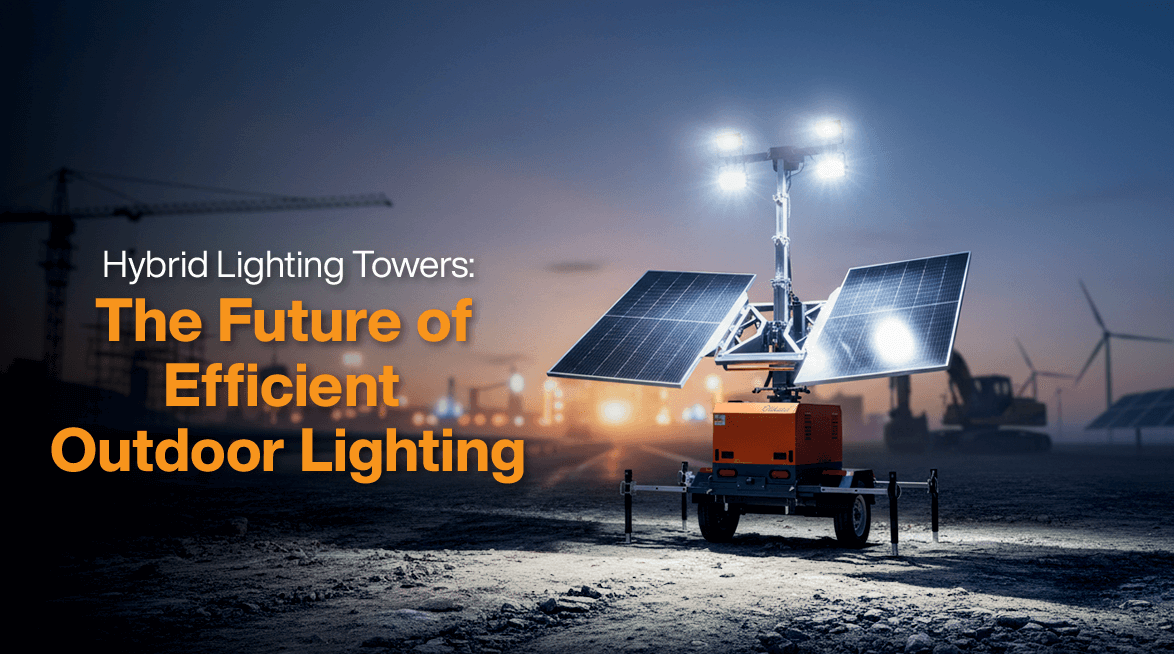
Hybrid towers work on a multi-power integration unit, which combines solar energy from photovoltaic panels, battery energy from lithium or deep-cycle AGM batteries, and a fuel-based generator as a backup.
This effective combination allows the system to maximize sunlight usage to produce free renewable electricity. It stores excess power in batteries for nighttime use and activates the generator only when necessary. This approach is efficient, reliable, and ensures continuous lighting.
2. Automatic Energy Switching
The smart control system allows the tower to use alternative sources, ensuring continuous lighting. This prevents wastage of energy and the lifespan of generators.
3. LED Efficiency
Most hybrid towers come with high-performance LED lights, which consume 60-80% less energy than traditional halogen lamps, and offer superior brightness as well as beam coverage.
Key Benefits of Hybrid Lighting Towers
Hybrid towers are not only environmentally friendly, but they are also strategically placed in terms of performance and cost efficiency.
Substantial Fuel Savings
The use of generators has decreased significantly with the aid of solar and battery power. This minimizes operational expenses, primarily in projects that need round-the-clock lighting.
Reduced Carbon Emissions
Hybrid systems are becoming more popular in organizations that struggle to meet their ESG objectives. They assist in reducing CO2 emissions up to 70 percent, depending on the setup.
Low Noise Output
The hybrid unit is virtually silent with batteries or solar energy, making it perfect for nighttime road work, urban construction, emergency relief efforts, and other areas that may require a low noise level.
Longer Service Life with Lower Maintenance
The hybrid towers also need fewer oil changes, experience lower mechanical wear, and require significantly less maintenance as the generator is started much less frequently.
Mobility & Flexibility
Hybrid towers have been developed to be easily towed, perform well in severe conditions, and can be deployed quickly. The Qube Solar tower by Olikara has tie-down slots at 4 corners, making it extremely mobile, providing steady lighting regardless of the highways, pipelines, mines, or temporary remote camps.
Industrial Applications: Where Hybrid Towers Outshine Traditional Options
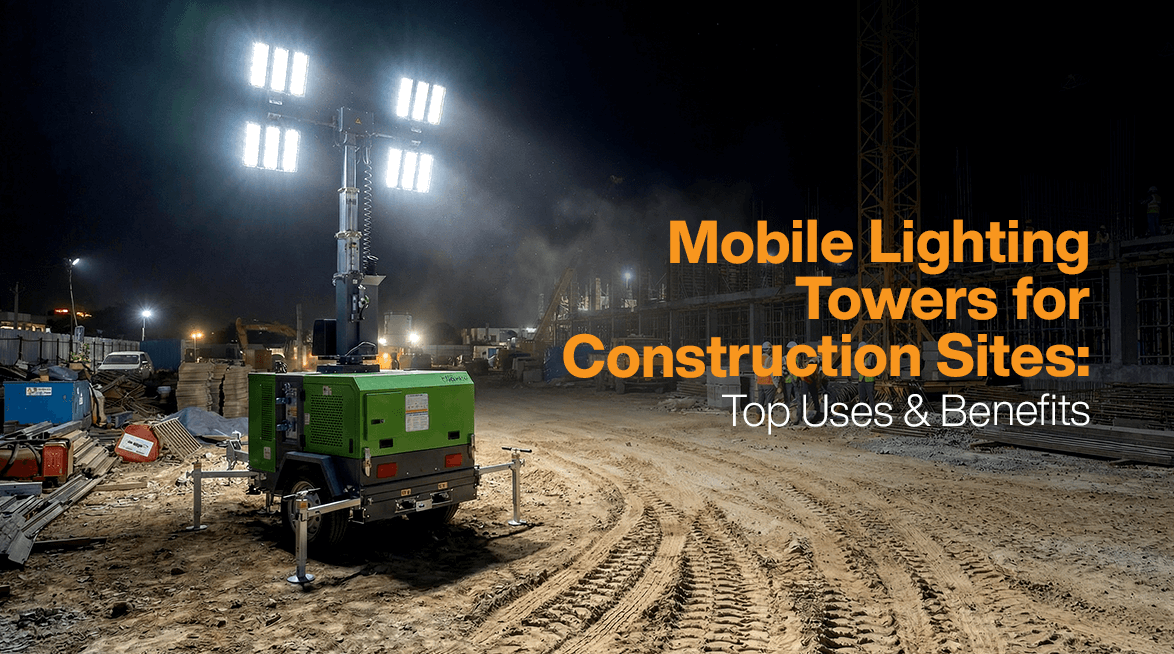
Construction and Infrastructure: Hybrid towers, which use significantly less fuel, are utilised to light highways, bridges, metro projects, and huge construction sites.
Mining and Quarrying: Mining operation requires powerful lamps all night. Hybrid systems eliminate the overload of generators and minimise downtimes.
Oil & Gas Sites: These locations are highly restrictive to environmental safety standards. Hybrid towers help meet the requirements of low noise and low emissions.
Emergency Response: In disasters or rescue operations during natural calamities, the hybrid towers are utilized, which can serve as a reliable source of light without being overly dependent on fuel availability.
Outdoor Events: Hybrid lighting is favored by festivals, sporting events, exhibitions, and concerts due to its silent mode of operation and reduced carbon footprint.
Also Read: Why Solar Light Towers Are the Smart Choice for Outdoor Lighting?
Why Demand for Hybrid Lighting Towers is Growing Globally?
The 2024 report had estimated the global light tower market at USD 2,393.3 million by 2024, and USD 3,597.3 million by 2033, with the solar-powered portion growing at an annual rate of 5.4 over the years to 2033. This demand is increasing due to the following reasons.
Increasing Sustainability Mandates
Governments and Multinational corporations are demanding the use of cleaner construction and mining processes with increased policy control on emissions, noise, and fuel consumption. These net-zero agendas perfectly align with hybrid towers as they become a viable method to reduce carbon emissions without compromising lighting performance.
With the emergence of sustainability as a fundamental need rather than a voluntary activity, various industries are shifting toward hybrid systems to comply with requirements and enhance their level of environmental integrity.
Rising Fuel Costs
As the price of fuel continues to fluctuate in the global market, organizations are increasingly relying on diesel towers. Hybrid systems are also far less fuel-consuming as they largely depend on solar and battery power and are therefore a more reliable and economically viable option.
In the long run, the increase in costs can be substantial due to the savings in fuel consumption resulting from the consumption of long and constant illumination (particularly in industries).
Focus on ESG Performance
The Environmental, Social, and Governance (ESG) benchmarks have become the focus of measuring the long-term value and the trust of the stakeholders in the company. In a move to enhance sustainability reporting, various organizations are embracing cleaner technologies that are showing some quantifiable development.
The hybrid light towers are a direct contribution to ESG performance through the reduction of emissions, noise pollution, and operational waste, which is why they are a very attractive upgrade for responsible businesses.
Technological Upgrades
In recent years, battery and solar technologies have undergone significant development to become more stable and durable. These improvements have not only made the hybrid towers possible but also extremely convenient to use in industrial applications.
Improved energy storage, advanced controllers, and efficient solar modules ensure consistent lighting, even in unfavorable conditions, boosting adoption rates.
Global Infrastructure Boom
The need to have sophisticated and reliable outdoor lighting solutions is being driven by massive infrastructure development in India, the Middle East, Africa, and in emerging economies.
Hybrid towers are the best combination of performance, sustainability, and cost-effectiveness for these mega-projects. The fact that they can work in off-grid remote areas and limit logistical overheads makes them particularly useful to governments and private contractors concerned with long-term development.
This market expansion has stimulated an increase in the number of hybrid lighting tower suppliers who are differentiating their product ranges, like Olikara, providing hybrid designs that fit the unique requirements of each industry.
Choosing the Right Hybrid Lighting Tower: A Checklist
The customers evaluating hybrid towers must consider:
- Battery type and capacity
- Solar panel wattage
- LED lumens and spread
- Generator fuel efficiency
- Run hours per full charge
- Tower height and mobility
- Intelligent regulation and surveillance.
- Durability in the construction of buildings.
Olikara, one of the major Hybrid Lighting Tower Manufacturers, provides bespoke systems and customize luminaires, battery banks, solar modules, and mast designs according to the project needs.
Conclusion
Hybrid Lighting Towers are no longer an optional upgrade; they are rapidly becoming the default for efficient, sustainable, and cost-effective outdoor lighting. With the need of industries to have cleaner energy solutions, hybrid systems provide the right balance in performance and environmentally responsible concerns.
Manufacturers and suppliers worldwide are enhancing speed by incorporating smarter technologies, improved batteries, and enhanced solar modules. Olikara Lighting Towers, among them, is one of the bright examples of how innovation, engineering perfection, and design with regard to sustainability can make outdoor lighting rediscover its future.
Hybrid Lighting Towers are not a future; they are a present, and Olikara’s hybrid towers are driving the world forward with cleaner, brighter, and smarter lighting.
For more information, contact us now!
FAQs
1. What are Hybrid Lighting towers?
Hybrid Lighting Towers utilize solar energy, batteries, and a fuel generator to create an efficient and constant outdoor lighting.
2. What is the advantage of using hybrid towers compared to diesel towers?
Hybrid towers offer several advantages over diesel towers, such as conserving fuel, producing fewer emissions, operating silently, and requiring less maintenance. They are more economical and less harmful to the environment as they can use renewable energy.
3. What can be the application of hybrid lighting towers?
Their applications include construction, mining, roadworks, oil and gas, events, and emergency applications.
4. What are the factors to consider during the selection of a hybrid lighting tower?
Among the key factors are battery capacity, solar panel efficiency, LED quality, mast height, mobility, and smart control features. Selecting Olikara as your preferred Hybrid Lighting Towers Supplier will guarantee improved performance.

Other Blog