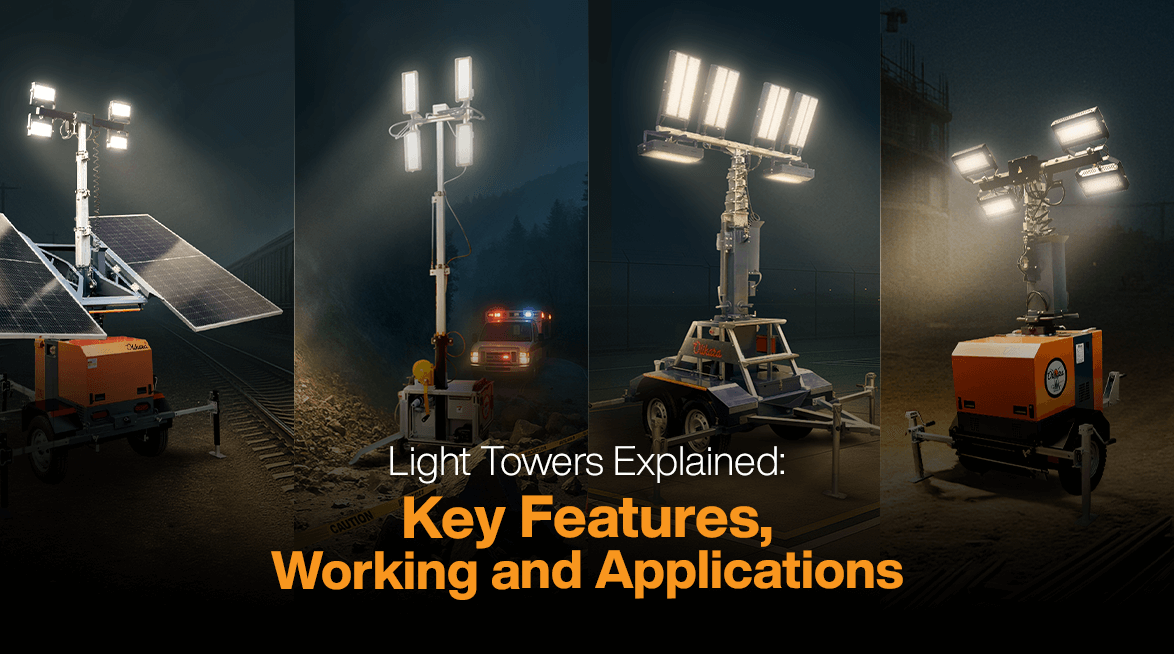
What is a Light Tower?
A light tower is a portable lighting system used in construction, mining, and outdoor projects to provide high-intensity illumination where electricity is not available. In this guide, we’ll explain how light towers work, their types, and how to choose the right one.
Light towers are essential for night operations, safety, and productivity in low-light environments.
How Do Light Towers Work?
Light towers operate by combining power generation + elevation + illumination into one system.
Step-by-Step Working:
1. Power Source Activation
Diesel engine / electric supply / solar panel provides energy
2. Lighting System
Lamps (LED / Metal Halide) convert energy into high-lumen light
3. Telescopic Mast
Extends vertically (typically 5–9 meters) for wide coverage
4. Control Panel
Used to operate lights, adjust brightness, and control mast
5. Mobility System
Trailer-mounted or skid-mounted for easy transport
Types of Light Towers (Diesel vs Electric vs Solar)
Choosing the right type depends on your application, budget, and power availability.
Diesel Light Towers
- Most commonly used
- Suitable for remote locations
- High power output
Best for: Construction, mining, infrastructure projects
Electric Light Towers
- Runs on direct electricity
- No fuel required
- Low noise & maintenance
Best for: Indoor or urban projects
Solar Light Towers
- Powered by solar panels + battery
- Eco-friendly & cost-saving
Best for: Sustainable projects, remote areas
LED Light Towers
- Energy-efficient lighting
- Longer lifespan than metal halide
Best for: Long-duration usage
Metal Halide Light Towers
- High intensity but consumes more power
- Traditional lighting option
Best for: Temporary heavy-duty lighting
Applications of Light Towers
Light towers are widely used across industries:
Construction Sites
Night work and safety lighting
Road & Highway Projects
Traffic management and visibility
Mining & Oil Fields
Continuous 24/7 operations
Events & Outdoor Functions
Concerts, exhibitions, festivals
Emergency & Disaster Relief
Temporary lighting in crisis situations
| Type | Power Source | Best Use |
|---|---|---|
| Diesel Light Tower | Generator | Remote sites |
| Electric Light Tower | Grid | Urban areas |
| Hybrid Light Tower | Solar + Diesel | Eco projects |
How to Choose the Right Light Tower
Selecting the right light tower is critical for efficiency and cost savings.
1. Lighting Requirement
- Area size (small / medium / large)
- Required brightness (lumens)
2. Power Source
- Diesel → remote areas
- Electric → urban areas
- Solar → eco-friendly projects
3. Mast Height
- Higher mast = wider coverage
- Standard: 5–9 meters
4. Fuel Efficiency
- Important for long-term cost savings
5. Portability
- Trailer-mounted = easy movement
- Skid-mounted = stable
6. Noise Level
- Important for residential or night usage
7. Maintenance & Durability
- Choose rugged design for harsh environments
Diesel vs Electric Light Towers
- Feature Diesel Electric
- Power Source Fuel Direct electricity
- Mobility High Limited
- Noise Higher Low
- Maintenance Moderate Low
- Cost Higher running cost Lower running cost
Tip: For long-term indoor or city use, electric is better. For remote sites, diesel is ideal.
Light Tower Price Factors
Price depends on:
- Type (diesel / electric / solar)
- Lamp type (LED / metal halide)
- Mast height
- Brand & build quality
Approx range: ₹2 lakh – ₹8 lakh+ (India)
Latest Trends in Light Towers (2026)
- LED adoption increasing
- Solar-powered towers gaining popularity
- Smart control systems (IoT-enabled)
- Hybrid light towers (diesel + battery)
FAQs
What is a light tower used for?
Light towers are used to provide temporary lighting in construction, mining, events, and emergency situations.
How do diesel light towers work?
They use a diesel engine to generate electricity, which powers high-intensity lamps mounted on a telescopic mast.
Are light towers towable?
Yes, most light towers are trailer-mounted and can be easily transported.
Which is better: LED or metal halide light towers?
LED light towers are more energy-efficient, durable, and cost-effective in the long run.
What is the lifespan of a light tower?
A well-maintained light tower can last 5–10 years, depending on usage and environment.
Conclusion
Light towers are essential equipment for industries that require reliable and high-intensity lighting. Choosing the right type—diesel, electric, or solar—depends on your project needs, location, and budget.

Other Blog