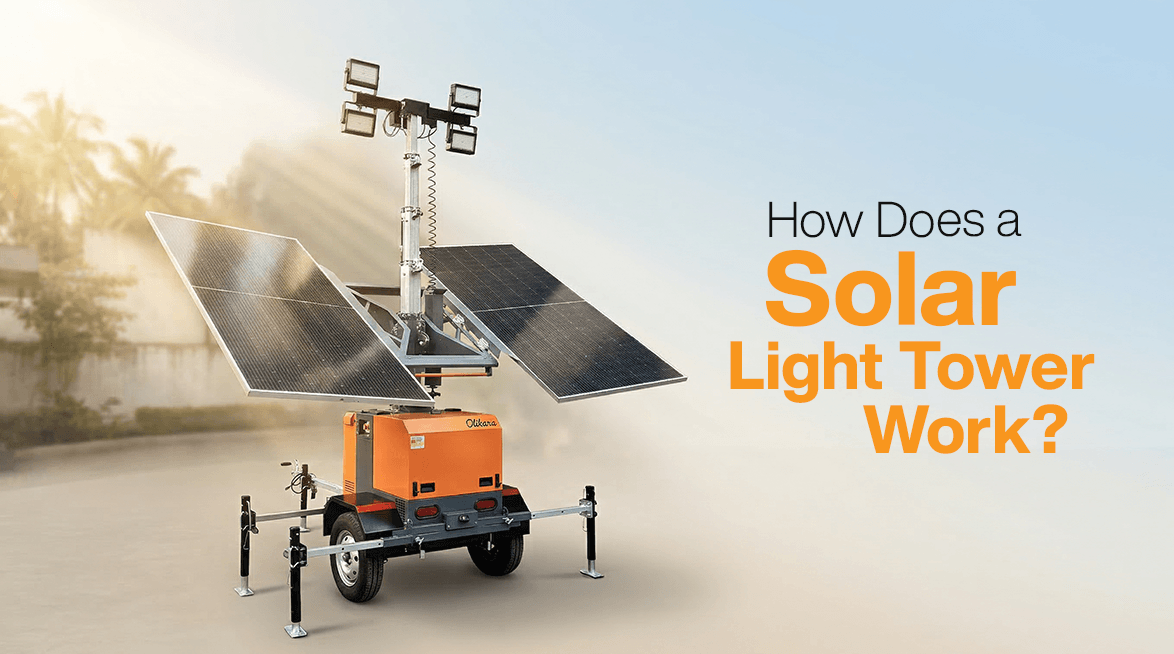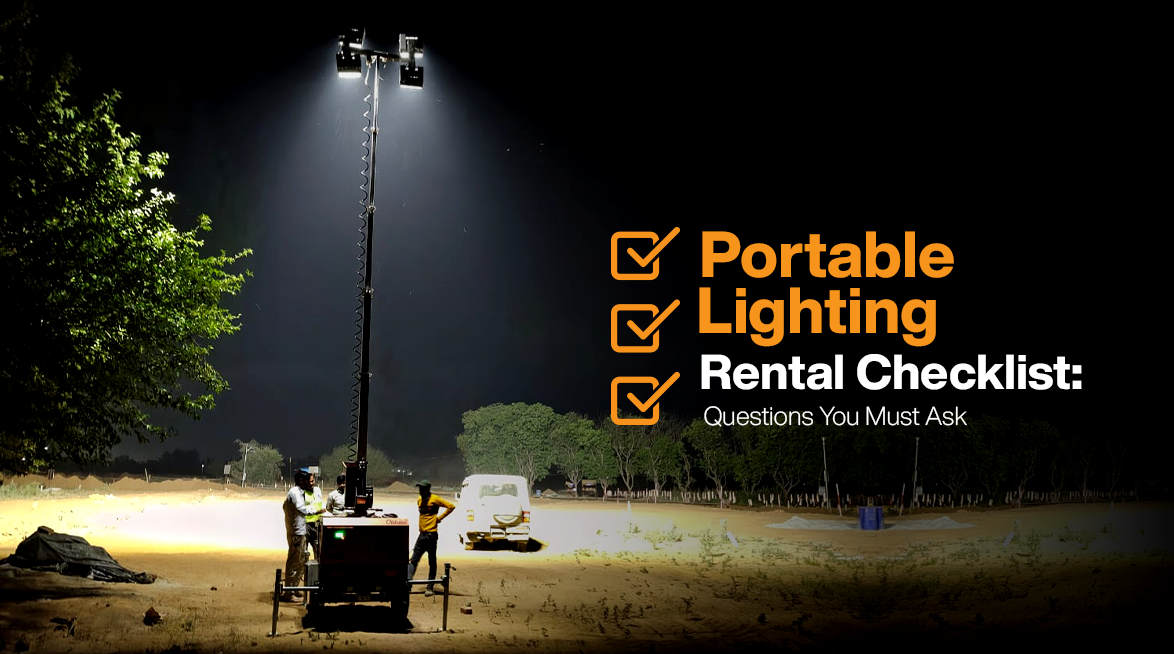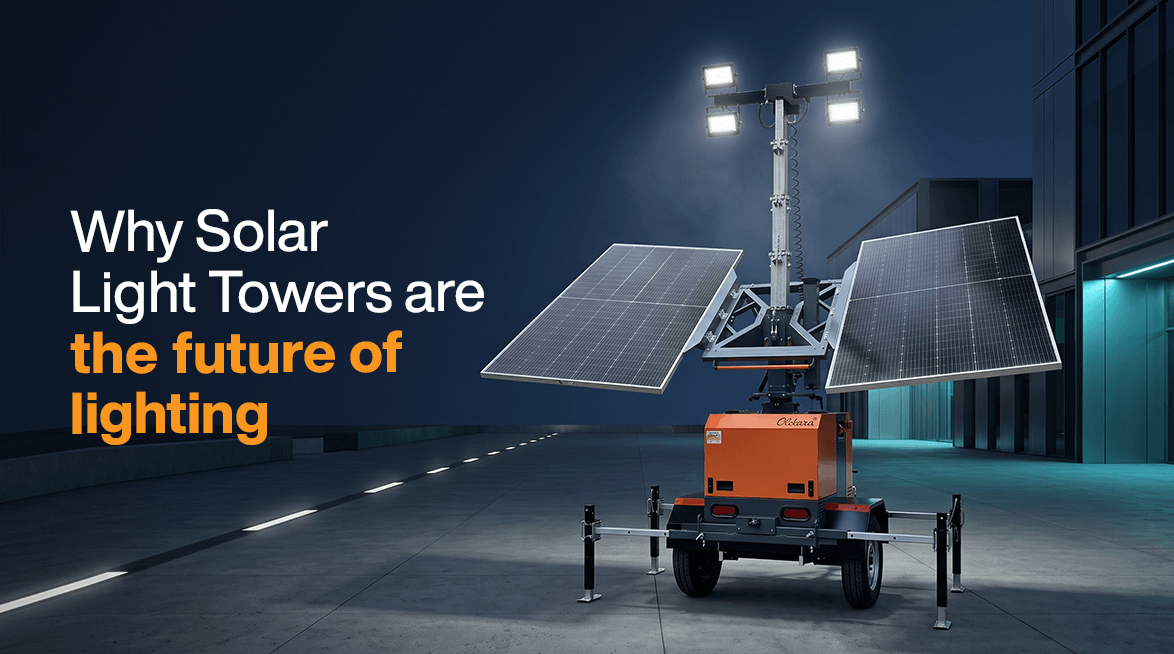
Solar-powered light towers offer a transformative approach to construction site lighting that is both more efficient and environmentally friendly, by combining renewable energy with effective LED technology. Solar lighting towers can provide illumination in remote areas without grid access, while their operating costs depend on factors such as sunlight availability, battery capacity, and maintenance requirements.
Solar-powered light towers are a great solution for building, mining, and infrastructure companies that are looking for more efficient alternatives to typical lighting approaches.
The choice of the right option largely depends on conditions like solar energy availability, battery capacity, usage period, and availability of backup power.
6 Reasons Why Solar Light Towers are the Future of Lighting
1. The Growing Shift Towards Solar-Powered Lighting
Companies are reimagining how they use temporary and outdoor lighting. Traditional light towers (diesel-powered) are effective, but need frequent refueling, maintenance, and service. Solar light towers, however, harness sunlight during the day and store the energy in batteries for nighttime lighting.
The broader energy transition is accelerating the shift from fossil fuels to cleaner alternatives, including solar power. The International Renewable Energy Agency (IRENA) mentions the fact that in 2024, renewable energy capacity witnessed record-breaking growth of 585 GW, which is 92.5% of the increase in the world’s capacity. Solar power has contributed significantly to the growth rate.
Solar lighting can reduce reliance on fuel-powered systems for temporary lighting, provided site conditions and sunlight availability are suitable.
2. Lower Operating Costs and Reduced Fuel Dependence
Another major advantage of solar light towers is the ability to cut down on the running costs. Constant fuel buying, transport, and engine upkeep are needed for diesel equipment. By using sunlight to power their systems, solar systems can help to offset these costs.
The primary financial benefits are:
- Lower fuel usage: If the system is designed correctly, solar power can provide much of the electricity required for lighting, thereby reducing reliance on traditional fuels.
- Reduced maintenance: Solar lighting systems that run on solar energy are more likely to have fewer moving parts, which can help lower routine maintenance needs.
- Decreased transportation of fuel: Off-grid projects can also do away with the need to transport fuel to off-grid locations.
- Predictable costs: Insensitivity to fluctuating prices of fuel makes long-range planning easier.
Nevertheless, total savings depend on costs related to the initial investment, frequency of battery replacements, availability of sunlight where the equipment is used, and how much the equipment is used.
Solar light towers are not always the cheapest option. A fair comparison should consider the total cost of ownership over the equipment’s operating life.
3. Lower Exhaust Emissions and Cleaner Environment
Diesel-powered towers emit exhaust while running their engines. Solar light towers can help reduce emissions and noise compared with diesel-powered alternatives, making them suitable for construction sites near residential areas, industrial facilities, and temporary event venues where environmental impact must be minimised. Also, battery-powered towers reduce noise pollution at night.
The environmental impact is dependent upon the generation of the electricity, the frequency of backup power use, and the methods used to produce and dispose of batteries. However, cutting down on diesel usage is a real step in reducing the carbon footprint of temporary lighting during operation.
4. Reliable Lighting for Remote and Infrastructure Projects
Electricity may not be available at highway construction projects, mines, railway yards, bridges, and other work sites. Temporary electrical connections can add expenses and slow down deployment.
Solar light towers provide an alternative way of producing and storing energy on-site. They are effective if they receive sufficient sunlight and have the correct battery size.
For instance, Olikara’s Qube Solar is a solar-powered lighting solution in the renewable category, and Qube Power Max Hybrid is a solar technology powered with a hybrid configuration, which is designed with a hybrid battery backup.
Solar-powered devices are beneficial for various projects that require temporary lighting instead of a stationary electric source. For longer projects, planners should ensure adequate battery capacity and arrange backup lighting for periods of limited sunlight.
5. Solar vs. Engine-Powered vs. Hybrid vs. Grid-Powered Light Towers
Solar is not the only power source for temporary lighting. The most appropriate one is determined by the availability of electricity, desired duration of the operation, working environment, and acceptable running expenses.
| Factor | Solar-powered | Engine-powered | Hybrid-powered | Grid-powered |
|---|---|---|---|---|
| Primary energy source | Solar panels and batteries | Petrol or diesel engine | Solar, batteries, and backup | Electrical supply |
| Fuel requirement | Usually none during solar operation | Required | Depends on backup usage | No on-site engine fuel for lighting |
| Emissions during operation | No direct exhaust during battery operation | Engine exhaust | Depends on backup use | Depends on electricity generation |
| Grid connection | Not normally required | Not required | Not necessarily required | Required |
| Weather dependence | Higher | Lower | Reduced through backup capability | Low when supply is reliable |
| Suitable applications | Remote sites with adequate sunlight | Demanding or remote operations | Sites needing efficiency and extended runtime | Sites with dependable electricity |
The right lighting tower is the one that meets your site’s needs while also being energy efficient and cost-effective.
6. Efficiency of Solar Lighting Improves with LED Technology
While solar panels produce power, effective light usage is driven by efficient lighting. Therefore, LED technology constitutes a significant aspect of modern light towers.
LED lights are generally more energy-efficient and durable than traditional lighting systems, providing a cost-effective solution for lighting a worksite. Lower energy requirements can help battery-powered units provide longer illumination, depending on the equipment’s design and operating conditions.
When choosing a solar light tower manufacturer, assess both the lighting system and the solar panels. Clients should consider parameters such as the total LED wattage, the illumination area, the height of the mast, the capacity of the battery, and the expected operating time instead of paying attention to the solar panels.
What Should Businesses Consider Before Choosing Solar Light Towers?
While solar lighting has many positive sides, it is not always the most preferable solution for a specific site.
When deciding on equipment, take into account the following:
- Sunlight availability: Analyze the expected weather conditions and daily sunshine at the site.
- Hours of operation: Establish the hours of operation per night.
- Battery capacity: Ensure the battery capacity is enough to fulfill the illumination requirements.
- Illumination needs: Align LED output, mast height, and coverage with the working area size and type.
- Backup: If continuous light is necessary for extended periods when light availability is limited, consider a hybrid system.
- Service and support: Compare the servicing requirements, spares availability, and technical support from solar light tower suppliers.
Overall ownership costs, such as equipment purchase, maintenance, replacement batteries, and backup fuel costs, should also be considered. This will give a more realistic picture than just looking at the initial purchase price.
Conclusion
Solar-powered towers are important for achieving cleaner and more efficient worksite illumination. They can be used in remote areas, construction and mining sites, as they help to save fuel and reduce the amount of engine maintenance operations.
Overall performance depends on the amount of sunlight, battery capacity, and the project operation requirements.
Through its lighting offerings, Olikara Lighting Towers demonstrates the applications of different power configurations to meet the diverse needs of a worksite.
FAQs
1. What are solar light towers used for?
Solar light towers provide portable illumination for construction sites, mining operations, railway yards, and other outdoor work areas. They are particularly useful at sites without grid access where reducing fuel consumption is a priority.
2. Are solar light towers suitable for use at night?
Yes, the energy from the solar light towers is stored in batteries during the day for use at night. The actual runtime of a light tower varies with the lighting load, charging conditions, battery capacity, and system design.
3. How do businesses choose reliable solar light tower suppliers?
Several factors businesses should consider are the output of the light, the battery capacity, the time the light is expected to run, its durability, maintenance requirements, and after-sales support.