Solar Light Towers for Remote Road Projects
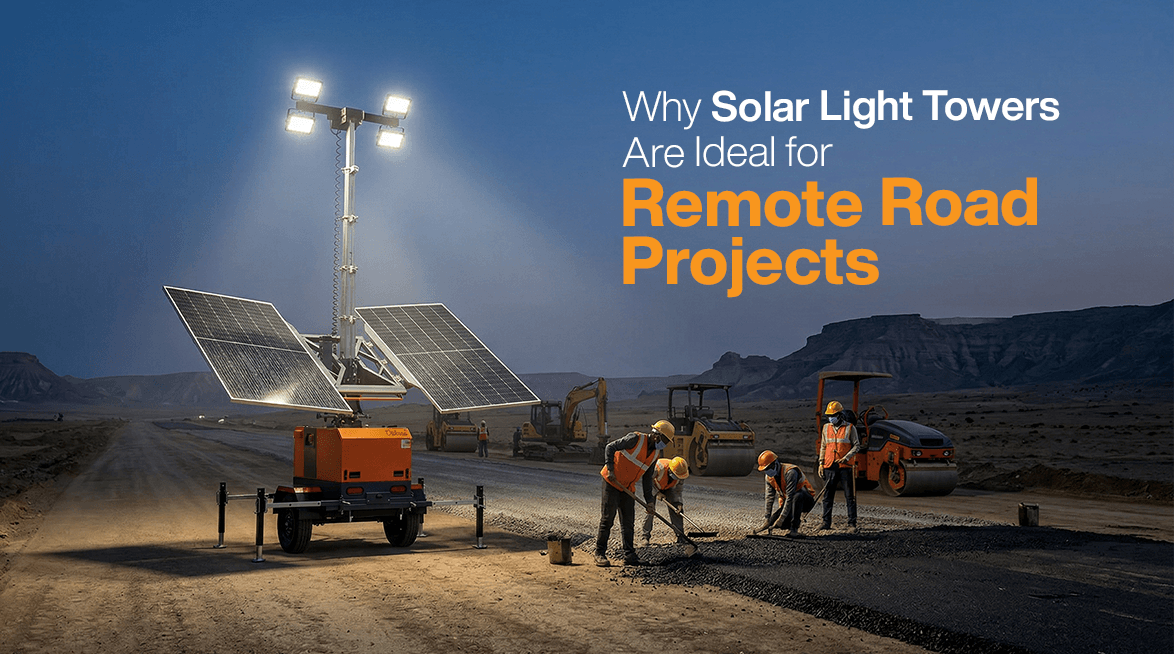
Remote road construction projects run in some of the harshest conditions: remote locations, inadequate infrastructure, and strict deadlines. Lighting, sometimes being overlooked, is a major operational backbone when projects are stretched to the night or low-visibility conditions. This is where the solar light towers come into play. They are redefining efficiency, sustainability, and reliability.
With the increasing growth of infrastructure all over the world, and particularly in the emerging economies, the transition towards renewable-powered equipment is not an option anymore, but a strategy.
This blog discusses the reasons behind the increasing reliance on solar-powered lighting systems for remote road projects and how contractors are using them to gain a competitive advantage.
7 Key Reasons Why Solar Light Towers are the Ideal Option
1. Eliminating Dependence on Fuel Logistics
Fuel supply is one of the biggest issues in remote road projects. Logistical complexity, higher costs, and operational risks are associated with the transportation of diesel towers to remote locations. Solar light towers eliminate this dependency.
Solar-powered towers come with photovoltaic panels and more battery storage compared to the traditional diesel-powered towers. This independence translates into uninterrupted power illumination even in areas where fuel access is inconsistent or expensive.
For instance, hybrid lighting systems, offered by Olikara Lighting Towers, a trusted solar light towers manufacturer, are commonly found in highway expansion ventures. These systems utilize solar power and have backups to maintain 24/7 lighting.
2. Significant Reductions in Operational Costs
Cost efficiency is one of the most important decision-making parameters in infrastructure projects.
Solar light towers have significantly lower operational costs as it does not require fuel. There are recurring costs involved in traditional diesel towers, such as fuel, oil changes, and engine maintenance.
In contrast, solar systems rely on renewable energy that has lower long-term operational expenses and reduced maintenance needs, which is why they are an efficient alternative.
An advanced solar tower models such as Qube Power Max Hybrid by Olikara, is an example. This tower is used in infrastructure projects. Its extended battery life reduces manual intervention and labour costs.
3. Eco-Friendly and Regulatory Compliance
Environmental sustainability is no longer a choice but a control measure in most regions of the world. The solar light towers have zero or low carbon emissions, which reduces the environmental footprint to a great extent.
They also produce minimal noise as compared to the diesel units, and this makes them suitable to carry out projects that are close to homes or environmentally sensitive areas.
4. Reliable Performance in Off-Grid Locations
Many remote road projects have no grid access, and therefore, traditional lighting solutions are not practical. Solar light towers are designed specifically for such conditions. They possess large-capacity batteries which store power during the day to provide constant light at night.
For instance, Olikara’s high-performance solar towers used in road construction come with a 7.2 kVAh battery pack with 4000 square meters of light coverage, making night operation easy.
5. Quick Deployment and High Mobility
Time is crucial in road construction projects, especially those with tight deadlines or phased execution. Solar light towers are developed with the aim of quick deployment. Due to their mobile and towable nature, they can be moved to various parts of a project with ease. They can be set up in a short amount of time and may not demand a lot of technical expertise.
This flexibility is especially useful in long highway projects, where the light requirements change with the advancement of construction.
6. Hybrid and Multi-Power Flexibility
While solar light towers are best suited to most remote applications, contemporary infrastructure development projects may demand flexible options.
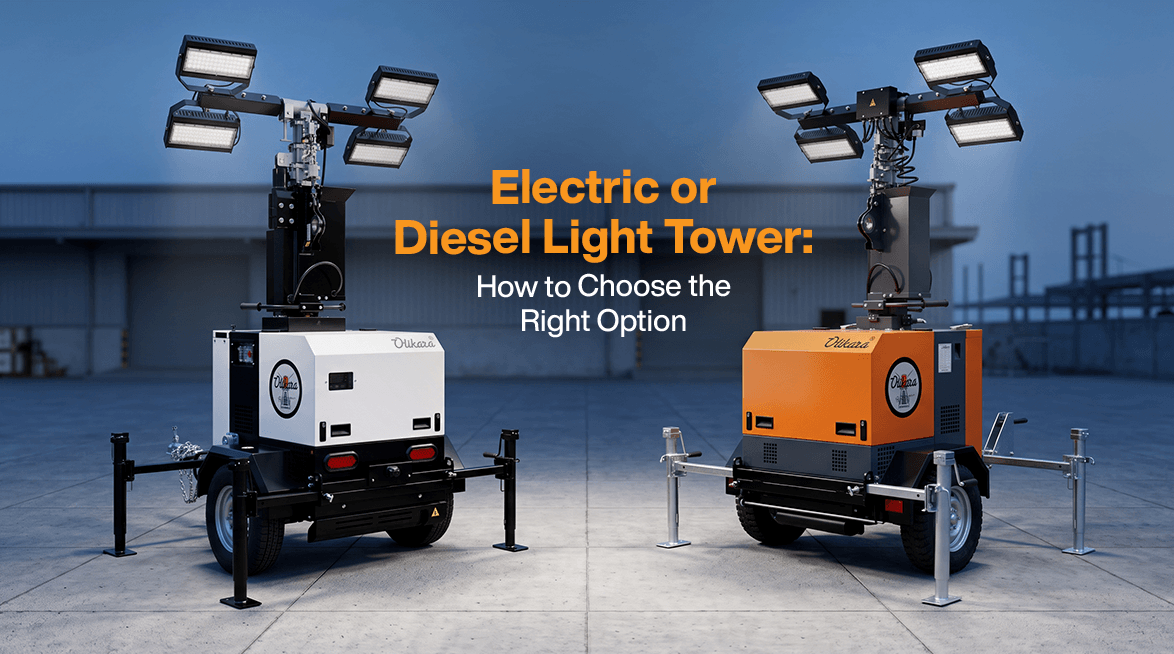
Hybrid light towers use a combination of solar energy and diesel or grid power that guarantees continuous performance during prolonged cloudy periods. Likewise, the grid-powered towers are utilized in semi-urban road developments where power supply is present.
For example:
- Solar models are widely used in remote highway projects with no grid connectivity.
- In large-scale infrastructure projects that need continuous lighting, hybrid towers are favored.
- Engine-powered towers remain relevant for extremely demanding conditions requiring high-intensity output.
This multi-power model allows contractors to choose a solution that best suits their needs, depending on the requirements of the project.
7. Low Noise Operation for Sensitive Environments
Unlike diesel generators, solar light towers operate silently.
This allows them to be suitable for projects around residential areas, wildlife zones, or environmentally sensitive areas. Less noise pollution would not only lead to a better working environment but also make sure that the local regulations are adhered to.
The Rising Demand for Solar Light Towers in Infrastructure
The use of solar-powered lighting worldwide is not a trend but a transformative change in construction. By 2035, the solar mobile light tower market is expected to reach USD 3.9 billion, with increasing demand for infrastructure and remote-site applications.
This increase is a result of increasing fuel prices, environmental policies, and the necessity to have dependable off-grid solutions. At the center of this transformation lies road construction, especially in remote or rural areas.
Why Contractors Prefer a Trusted Solar Light Towers Supplier
The selection of an appropriate solar light tower supplier is the key to project success.
Key considerations include:
- Build quality and durability
- Backup time and battery life
- Ease of maintenance
- Service network and after-sales support
Reliable suppliers such as Olikara ensure that lighting systems are reliable even in harsh conditions, so that there is less downtime and operational risks.
Conclusion
Solar light towers are no longer an alternative; they are the future of remote road construction lighting. They are most suitable for modern infrastructure projects due to their ability to reduce costs and fuel consumption, as well as help in encouraging sustainable practices.
With the ongoing growth of infrastructure projects into remote areas, it is crucial to collaborate with an established solar light tower manufacturer. Olikara Lighting Towers provides high-quality solar light towers. At Olikara, we show how innovation in lighting technology can transform project outcomes and drive sustainable growth.
Contact now, and make your remote road projects illuminated.
FAQs
1. What are the benefits of solar light towers over diesel towers in remote projects?
Solar light towers do not require fuel dependency, are less expensive and noiseless, hence suitable in remote and sensitive areas.
2. Can solar light towers operate when there is low sunlight?
Yes, the modern towers have high-capacity batteries to facilitate constant operation even on cloudy days.
3. Can solar light towers be used on a large road project?
Absolutely. They are scalable, mobile, and can be used in different stages of the project effectively.
4. What should I look for in a solar light tower supplier?
Focus on durability, battery efficiency, after-sales support, and proven performance in real-world infrastructure projects.