Industrial plants operate in environments where safety and operational continuity are non-negotiable. Whether in a manufacturing plant or a refinery, mining site, steel mill, warehouse, or construction site, power outages and emergencies can be a real challenge. This is where effective emergency lighting is key.
Advanced emergency lighting towers are widely used in modern industrial facilities to provide immediate lighting in power outages, maintenance shutdowns, accidents or during disaster-response scenarios. Emergency lighting selection becomes more complicated when industrial systems enter the picture, so it’s important to consider power sources, runtime, mobility and site conditions.
This guide explores the best emergency lighting options available today and how industrial plants can choose the most suitable solution.
Why Emergency Lighting Matters in Industrial Plants
Many industrial environments involve the use of heavy equipment, hazardous materials, high work surfaces, and large working spaces. When visibility suddenly decreases, it can cause:
- Workplace accidents
- Equipment damage
- Production interruptions
- Delayed emergency response
- Regulatory compliance issues
Emergency lighting systems ensure evacuation paths, areas of operation, maintenance areas and critical equipment stay properly illuminated until normal power is restored.
In fact, the U.S. Bureau of Labor Statistics identified 2.6 million non-fatal workplace injuries and illnesses, further stressing the value of workplace safety systems like emergency lighting and visibility management.
Types of Emergency Lighting Solutions Best for Industrial Plants
1. Engine-Powered Emergency Lighting Towers
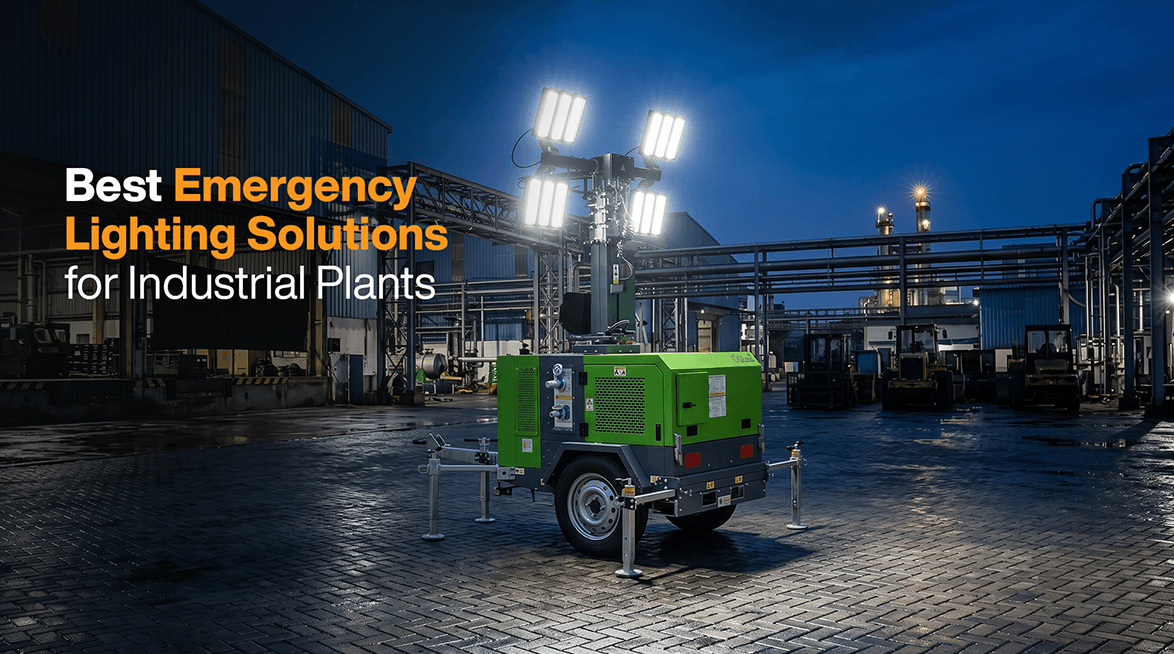
Engine-powered towers continue to be a reliable emergency lighting system for industrial use. These units function autonomously from the electrical grid and are well suited for remote sites, construction projects, mining operations, and industrial plants in areas where power is unstable.
For example, Olikara’s Qube Power Mini is a small, portable engine-powered lighting tower that can be used for emergency response and small-scale industrial applications. With it’s elevated mast for illumination and dependable diesel-powered operation, Qube Power is well suited for maintenance shutdowns and temporary emergency work locations within larger facilities
Engine-powered towers remain a preferred choice due to several key factors:
- Immediate deployment
- Long operating hours
- Consistent illumination
- No dependence on utility power
- Reliable performance in extreme conditions
For facilities requiring extended emergency operations, Olikara’s larger engine-powered models such as Qube Power Max are designed to support demanding industrial and infrastructure environments.
2. Hybrid Emergency Lighting Towers
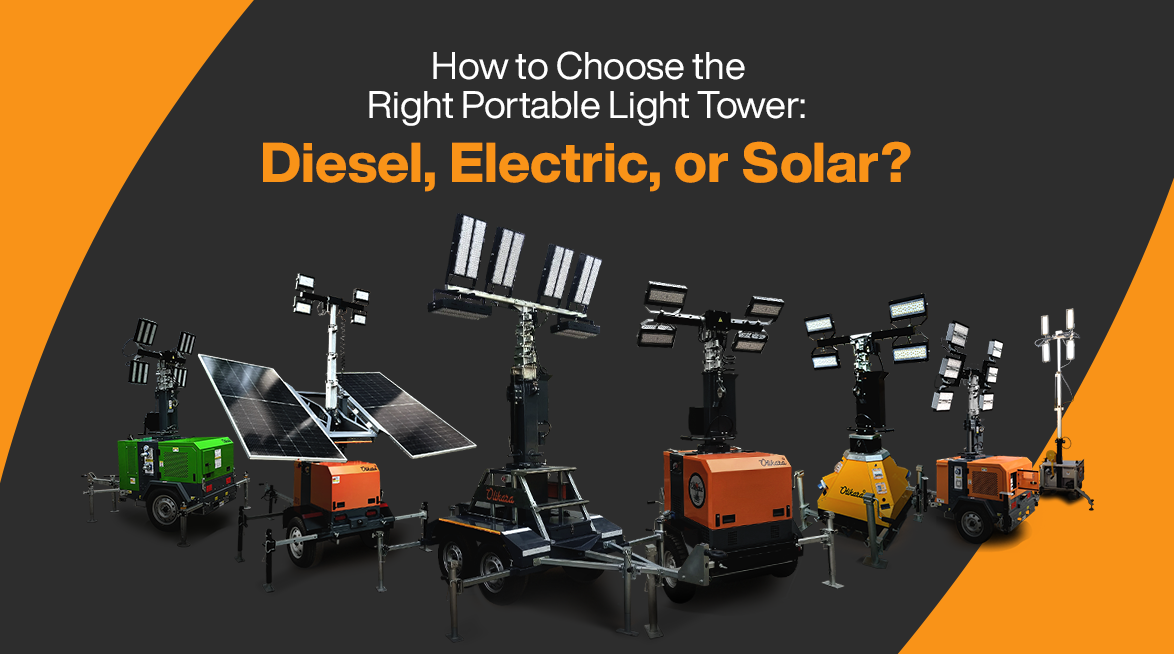
Energy efficiency and sustainability have become key priorities across the industrial sector. As a result, hybrid lighting is one of the most promising solutions to the traditional diesel-only lighting technologies.
The hybrid lighting towers integrate battery power, renewable energy and back-up engine technology. This method can significantly reduce the fuel usage while maintaining reliable illumination during emergencies.
One prominent example is Olikara’s Qube Power Max Hybrid, a hybrid battery-powered and diesel-driven solution that ensures reliable emergency lighting for industrial facilities, mining operations, and major infrastructure projects.
Here are some of the benefits of hybrid towers:
#1 Reduced Fuel Costs
The battery system handles a significant portion of lighting demand, reducing engine runtime and fuel consumption.
#2 Lower Emissions
In achieving sustainability targets, industrial premises can keep their emergency preparedness while also minimizing environmental footprint.
#3 Reduced Noise Levels
Unlike traditional diesel towers, hybrid systems operate more quietly, which is ideal for environments where noise control is a priority.
#4 Extended Emergency Coverage
Even when fuel availability becomes limited during emergencies, hybrid towers can continue operating through battery support.
Hybrid emergency lighting is a great option for industrial plants with long-term operational efficiency and environmental responsibility in mind.
3. Grid-Powered Emergency Lighting Towers
Grid-powered emergency lighting towers are suitable for industrial applications where electrical services are reliable. These systems are directly linked to existing electrical power sources and eliminate fuel costs.
They are especially effective when used in:
- Manufacturing plants
- Steel facilities
- Warehouses
- Stadium infrastructure
- Industrial campuses
One such example is Olikara’s Qube Grid Base/Trailer, which is designed for locations with access to utility power where temporary emergency lighting is required. The Qube Grid Max can provide intense illumination for larger demands, and it eliminates fuel storage and engine maintenance.
The use of grid powered towers has several operational advantages:
- Zero fuel consumption
- Lower maintenance requirements
- Continuous operation where grid access exists
- Reduced operating expenses
- Cleaner workplace environments
Usually, these solutions are used in integrated emergency preparedness programs for industrial plants, particularly for maintenance shutdowns and facility-wide safety programs.
Key Factors When Choosing Emergency Lighting Towers
Not all industrial plants have the same requirements. There are several factors to consider when choosing emergency lighting equipment.
#1 Site Size
For large industrial facilities, larger masts and greater illumination coverage are needed.
#2 Runtime Requirements
For facilities running around the clock, it’s important to consider lighting towers that offer extended runtime and dependable performance.
#3 Power Availability
Engine-powered or hybrid systems typically are needed at remote locations, and grid-powered systems can be effective in urban areas.
#4 Environmental Conditions
Industrial locations such as mines, oil rigs, and remote project sites require robust equipment capable of resisting dust, vibration, and harsh weather conditions.
#5 Regulatory Compliance
Emergency lighting systems should support in the maintenance of workplace safety and emergency preparedness practices.
#6 Maintenance Requirements
Organizations need to consider fuel logistics, servicing schedules and long-term operational costs when selecting equipment.
Building a Reliable Emergency Lighting Strategy
The most resilient industrial facilities do not rely on any on any single emergency lighting system. On the contrary, they work out a multi-level lighting approach that incorporates:
- Fixed emergency lighting
- Mobile lighting towers
- Backup power systems
- Portable LED units
- Site-wide emergency response planning
This comprehensive solution ensures adequate illumination even during the most severe emergencies and for long periods.
By combining engine-powered, hybrid, and grid-powered lighting technologies, industrial facilities can strengthen operational resilience and maintain business continuity during emergencies.
Conclusion
The first step in emergency preparedness starts with visibility. During emergency situations, inadequate lighting can cause delays, mishaps, and operational disruptions that industrial facilities simply cannot afford.
The modern emergency lighting tower is a reliable source of light for various industrial uses, from factories, warehouses, mining, to infrastructures. The choice between the best lighting solution depends on the specific requirements of the workplace, and the right solution can make a significant difference in terms of safety and operational continuity.
Olikara Lighting Towers is one of the well-known and renowned emergency lighting tower manufacturers that is continuously creating innovative and state-of-the-art solutions. Its range of lighting towers cater to the changing emergency lighting demands of the present-day industries.
| Looking for reliable emergency lighting for your industrial facility? Contact now! |
FAQs
1. What is the purpose of emergency lighting towers?
Emergency lighting towers are portable lighting systems designed to provide immediate lighting in the event of a power outage, emergency, disaster response or maintenance activities.
2. Which is better for industrial plants, engine-powered or hybrid lighting towers?
Hybrid towers offer the benefit of lower fuel consumption and reduced emissions, whereas engine-powered towers offer maximum independence. This will be dependent on site requirements and the purpose of the activity.
3. Can grid-powered lighting towers be used in emergencies?
Yes. If the electric grid is available, grid-powered towers are especially beneficial because they can be used to provide light 24 hours a day at low operating costs.
4. What are the typical applications of emergency lighting towers?
Typical applications for emergency lighting towers include manufacturing plants, mining, oil and gas installations, steel plants, infrastructure projects, and warehouses and construction sites.