Almost every industry relies on lighting, as it not only provides power illumination but also is an important factor for safety and operational efficiency. From a highway construction project to a mining operation, outdoor event, or industrial facility, selecting the correct lighting system can make all the difference in project results.
One of the most frequently asked questions by project managers and site operators is: mobile light towers or fixed lighting, which is a better choice? There is no simple answer to the question. These are both light solutions, but designed for different operating requirements.
Let’s delve into every solution in detail.
Understanding Mobile Light Towers
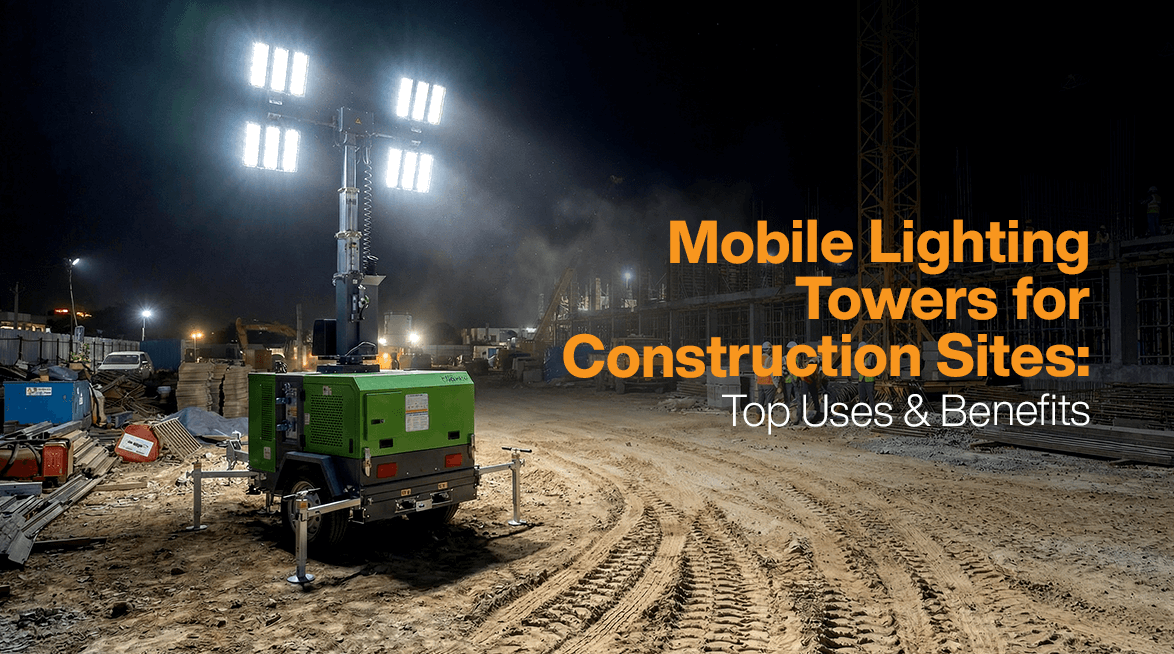
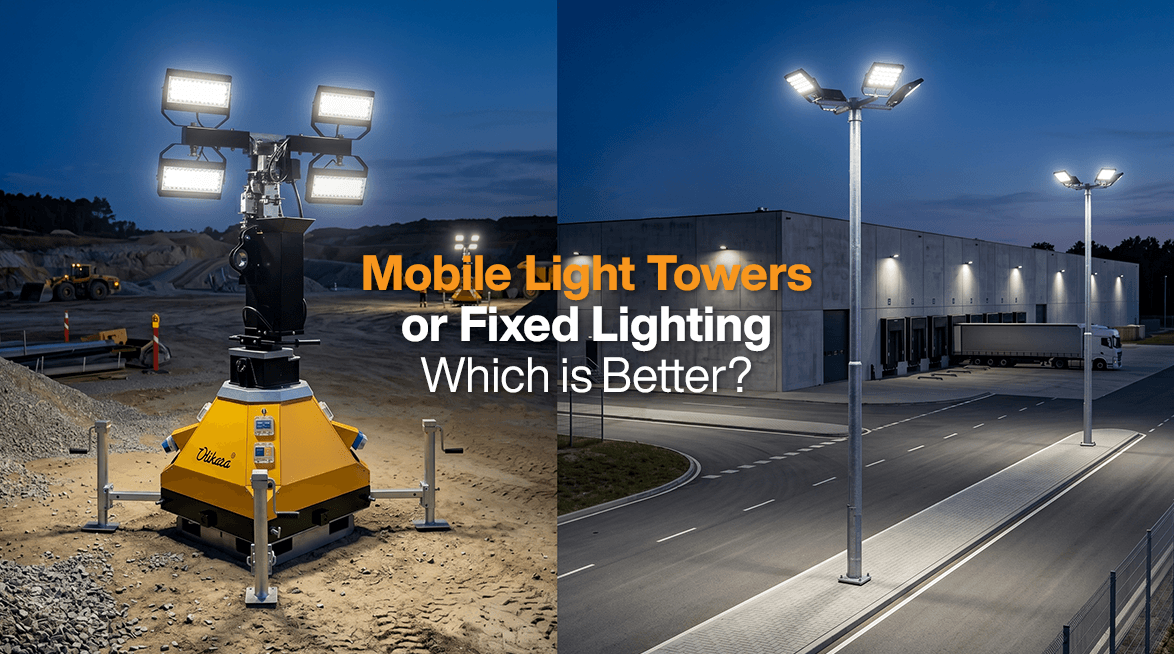
Mobile light towers are portable lighting units for providing lighting when and where it’s required. These towers are attached to a trailer or small base, and can be transported swiftly and set up in just minutes.
Unlike traditional lighting systems, mobile towers are not a permanent installation and do not require a specific site. They’re versatile, and are commonly utilized in different industries, including the construction, mining and outdoor events sectors where lighting needs can change frequently.
Modern towers can be powered in a number of ways such as engine power, hybrid power, solar power or grid power. This versatility enables businesses to choose a lighting option that aligns with their specific environment and energy resources.
What is Fixed Lighting?
Fixed lighting is the permanent installation where the lighting system is connected to a special electrical system. Typically used in airports, ports, warehouses, stadiums and industrial facilities where lighting needs are steady over extended periods.
Fixed lighting is intended to be used for a long period of time and requires much planning, electrical wiring, poles, foundations and installation. The system is reliable for many years after installation, with comparatively few relocation issues.
Fixed lighting is a viable long-term investment in facilities that are located on a single site and have been used for years. But it can be problematic in projects with changing work sites.
6 Factors to Consider: Mobile Fixed Lights VS. Fixed Lighting
#1 Mobility and Flexibility
The biggest distinction between mobile light towers and fixed lighting is mobility. Projects such as road construction, railway maintenance, and mining exploration rarely remain confined to one location. Work areas shift, project boundaries expand, and lighting requirements evolve. Under these circumstances, portability is a significant benefit.
For instance, an engine-driven tower like Olikara’s Qube Power Max can be moved to different areas of a project as it advances, avoiding the need to build new infrastructure in each location.
Fixed lighting systems, on the other hand, are permanently installed in a fixed position. Depending on the change of operational requirements, this can lead to further installations, which results in higher costs and project complexity.
Mobile Light Towers come with several benefits:
- Can be deployed and moved quickly
- Suitable for changing project layouts
- No permanent infrastructure is needed
- Effective for temporary operations
- Can serve multiple projects over their lifespan
For industries that depend on flexibility, mobile towers often provide a more practical solution.
#2 Installation Costs and Setup Time
Time equals money in any project site and lighting infrastructure is no exception. Fixed lighting systems require a substantial upfront investment. Businesses have to undertake site assessment, civil works, electrical works, erect poles and secure approvals before they even have the light on. The installation process can take weeks or months, depending on the size of the project.
In contrast, mobile light towers are made for instant use. Towers can be moved quickly to the site, set up correctly, and put into operation in a matter of hours.
Look at a grid-powered option like Olikara’s Qube Grid Base/Trailer. Where electrical power is available, the unit can provide immediate light without the need for permanent lighting structures to be built.
#3 Long-Term Costs
Businesses tend to look at the purchase price when comparing costs. The true cost of lighting, however, involves more than the initial cost. Fixed lighting could be more economical in the long-term for larger facilities like manufacturing plants and warehouses. After construction, costs are fairly stable.
But the case is different with temporary projects.
Suppose a contractor was involved in several highway projects in various areas. Such permanent lighting is too expensive to be installed at each location. In such instances, mobile towers can be moved from location to location, cutting down on infrastructure costs.
As a result, the most appropriate solution will vary depending on the extent and duration of the project.
#4 Power Source Flexibility
One of the biggest benefits that modern mobile light towers manufacturers provide is to offer a variety of power options. Every project has a different energy demand and mobile towers can be configured to meet them.
Engine-powered solutions are still very effective for sectors where there is no grid power, such as remote construction sites and mining operations. Examples include Olikara’s mobile lighting towers:
- Qube Power Mini
- Qube Power
- Qube Power Max
Most of the time, traditional light fixtures rely on one power source and become less adaptable if the location changes. Such towers are designed to provide safe lighting in difficult environments where a constant source of light is essential.
#5 Reliability in Challenging Environments
Construction, mining, and infrastructure projects often operate in harsh environments, lighting can be affected by dust, vibration, extreme temperatures, and variations in weather.
Mobile towers are actually specifically developed for these conditions. These sturdy systems can operate in areas where installing lighting systems is challenging or costly.
For instance, mining will often move to a different area of excavation. Portable towers can be moved from place to place to provide uniform lighting and continue operations.
While great in controlled environments, fixed lighting might not be as flexible in a rugged, changing worksite.
#6 Sustainability and Energy Efficiency
Sustainability has emerged as a key factor in the planning of projects today.
The development of LED technology has led to more efficient energy use in both fixed and mobile lighting. But the mobile tower is rapidly changing and has incorporated renewable and hybrid energy solutions.
A concrete instance of this is Olikara’s Qube Power Max Hybrid, which enables site operations and illumination with reduced emissions and at the same time delivers consistent lighting on challenging projects.
Switching between power sources and incorporating renewable energy sources provides mobile towers with an extraordinary edge as regulations tighten.
Which Industries Benefit Most from Each Solution?
Certain industries naturally align better with one lighting solution than the other.
Mobile Light Towers can be used for:
- Construction projects
- Construction of highways and bridges
- Mining operations
- Oil and gas sites
- Outdoor events
- Railway maintenance
- Emergency response operations
Fixed Lighting is perfect for:
- Manufacturing facilities
- Airports
- Ports
- Warehouses
- Stadiums
- Logistics centers
It is mostly determined by whether the lighting need is temporary or permanent.
Mobile Light Towers or Fixed Lighting: The Final Verdict
There is no single winner because each project is different with various operational needs.
Fixed lighting can be a long-term, stable and cost-effective solution if your facility is one location and has consistent lighting requirements.
However, or projects that require mobility, quick installation, flexibility or remote site operation, there is definite benefit in using Mobile Light Towers. They are portable, flexible and can be used with a range of power sources, and can be adapted to site conditions, which makes them an increasingly popular choice in industries.
Mobile lighting solutions have the potential to make an even greater impact in the years to come. In fact, market trends suggest that there’s been a tremendous increase in demand for portable lighting solutions. The global light tower market is projected to be valued at USD 3597.3 million by 2033, as infrastructure construction and the rising demand for temporary lighting solutions drive the market.
Conclusion
The debate between mobile light towers or fixed lighting ultimately comes down to the nature of the project. Fixed lighting is effective for permanent facilities where investment in infrastructure is justified. Mobile solutions, in contrast, offer unsurpassed flexibility and adaptability for temporary worksites.
When it comes to the lighting solutions, businesses should work with experienced mobile light tower manufacturers that understand the demands of modern industrial operations. Olikara Lighting Towers have continued to supply solutions to power modern industry with the combination of engine-powered, hybrid-powered and grid-powered options. At Olikara, we meet the different operational needs of businesses and provide them with reliable lighting solutions.
Find the right lighting solution for your project. Contact now! |
FAQs
1. What is the biggest advantage of mobile light towers over fixed lighting?
Mobile light towers can be moved quickly and easily, making them ideal for temporary projects and changing work environments.
2. What makes the mobile light towers so desirable for construction projects?
They offer quick deployment, flexibility, and no need for a permanent electrical setup.
3. Are hybrid-powered light towers more sustainable?
Yes. Combined systems provide a balance of reduced fuel consumption and lower emissions, whilst still delivering adequate light output for challenging applications.