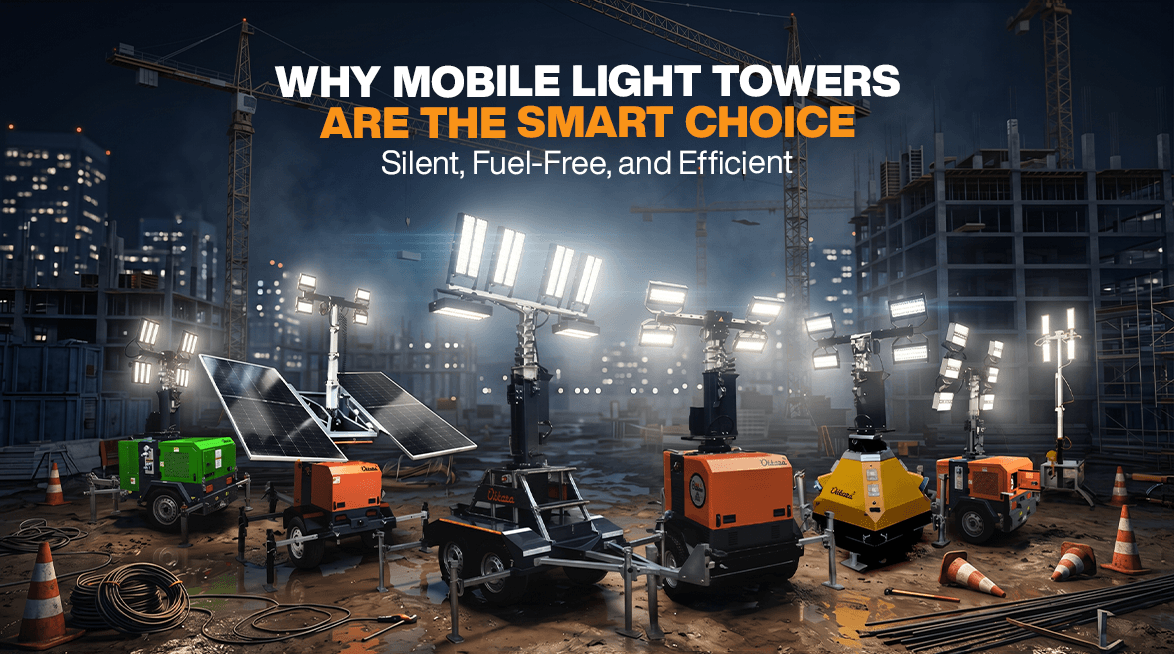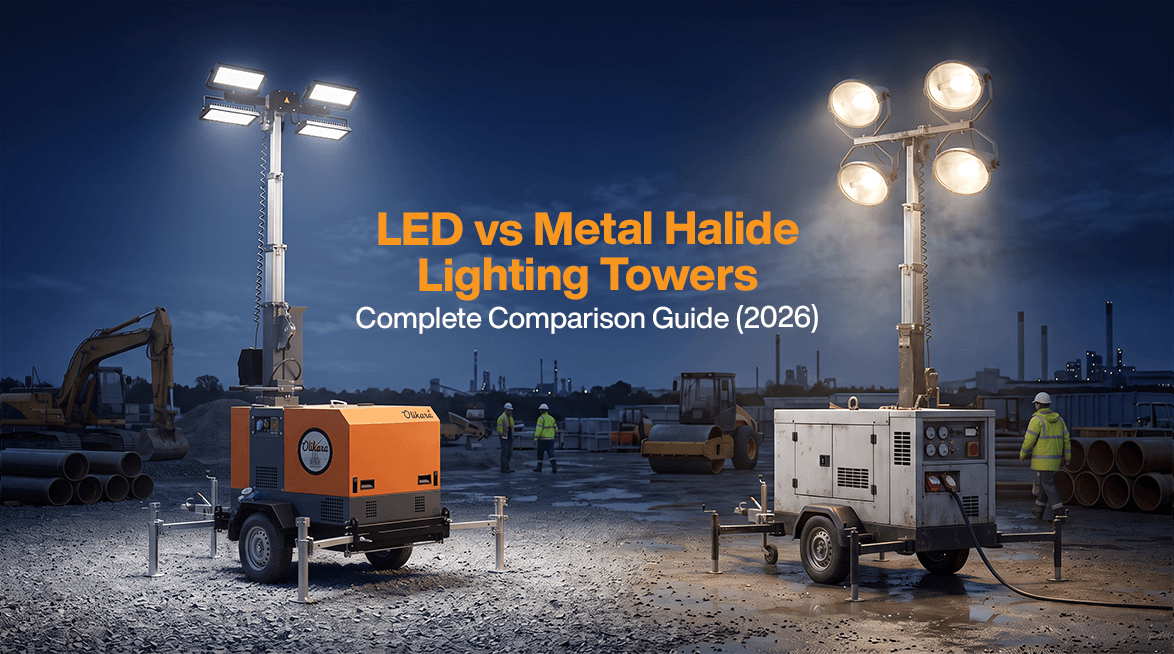
If you’re comparing LED lighting towers and metal halide lighting towers, the answer is easy: LED lighting towers are more energy-efficient, are longer-lasting, and require less maintenance. Metal halide lighting towers still serve a few niche applications but the benefits of LED technology are making it the preferred choice in the construction, mining, and other emergency management sectors.
Industrial lighting technology has evolved significantly over the past decade. The shift toward LED-powered mobile lighting towers was fueled by a number of trends, including rising fuel prices, growing sustainability mandates, and a demand for continuous operations. Today, organizations are no longer just selecting lighting equipment according to its brightness, but they are also considering total cost of ownership, environmental footprint, maintenance needs, and flexibility of operation.
Let’s compare LED vs metal halide lighting towers and select the best one for your needs.
Why the Industry is Moving Towards LED Lighting
Metal halide lamps were the light sources used in industrial lighting for many years, as they provided strong lighting over a wide area. However, they were introduced at a time when energy efficiency was not a primary consideration. Also, the world consumes almost 15% of its electricity from lighting, and one of the quickest ways to lower electricity use as well as operational emissions is to switch to efficient LED technology.
This trend has made LED lighting towers the preferred solution across industries worldwide. Today’s LED lighting towers provide equal or better illumination while consuming less power, generating less heat, and requiring significantly fewer replacements throughout their lifecycle.
This change is particularly significant when working on a project that runs 10–16 hours a day, where even minor efficiency gains over the course of months or years can lead to significant fuel and maintenance savings.
| Feature | LED Lighting Towers | Metal Halide Towers |
|---|---|---|
| Energy Consumption | Very Low | High |
| Light Output | Instant full brightness | Requires warm-up time |
| Lifespan | 50,000–100,000 hours | 6,000–15,000 hours |
| Fuel Consumption | Lower | Higher |
| Heat Generation | Minimal | Significant |
| Maintenance | Very Low | Frequent lamp replacement |
| Light Quality | Excellent visibility | Good, but deteriorates with time |
| Restart After Power Loss | Instant | Requires cooling period |
| Environmental Impact | Lower carbon footprint | Higher emissions due to greater fuel usage |
| Overall Operating Cost | Lower | Higher |
Key Differences Between LED and Metal Halide Lighting Towers
1. Energy Efficiency and Fuel Savings
LED lighting towers consume significantly less energy while delivering higher-quality illumination than metal halide lighting towers. This cuts the generator load and means that fuel savings are more noticeable during prolonged periods of operation.
When multiple sites are involved, reduction in fuel can result in significant operational savings over the life of the equipment for the contractor.
2. Lifespan and Maintenance Requirements
The most significant advantage of LED technology is its very long lifespan, extending from 50,000 to 100,000 hours. Metal halide lamps typically last between 6,000 and 15,000 hours and also require maintenance of components such as the ballast and ignitor.
This reduction in replacement results in less downtime, lower maintenance expenses and increased productivity on the most critical projects.
3. Lighting Performance and Worker Safety
LED lights deliver full brightness instantly, uniform light distribution and superb colour rendering, allowing operators to clearly identify equipment, obstacles and hazards clearly.
Metal halide lamps take a few minutes to reach their peak brightness, impacting visibility and overall safety in the workplace.
4. Operating Costs Over the Equipment’s Lifetime
Although LED lighting towers may involve a higher initial investment, they offer a significantly lower total cost of ownership.
Lower fuel consumption, minimal maintenance, and longer component life significantly reduce operating costs, making LED lighting towers the more economical solution over their service life.
5. Application Flexibility Across Industries
LED lighting towers are highly versatile and are available in engine-powered, hybrid-powered, grid-powered, and solar-assisted configurations.
Their flexibility their flexibility makes them suitable for construction sites, railway maintenance sites, mining operations, infrastructure projects, emergency response, ports, airports and outdoor events requiring either temporary or long-term lighting solutions.
Choosing the Right Power Source Matters Too
Modern lighting tower manufacturers offer a wide range of power options to meet different operational needs.
In areas without power, engine-powered towers are still the best choice. These products range in size from Qube Power Mini, for small projects, to Qube Power and Qube Power Max for medium and large-scale projects, respectively, but offer the same ease of transport and solid field performance.
Hybrid lighting towers combine battery storage, solar charging, and engine backup to decrease fuel consumption and increase operational time. The Qube Power Max Hybrid is an example of such an intelligent solution, as it optimally integrates several power sources to support long-duration lighting applications that generate lower emissions.
If permanent electrical infrastructure is present, grid-powered solutions completely remove generator fuel costs. Lighting systems like Qube Grid and Qube Grid Max provide reliable illumination in industrial complexes, stadiums, railway yards and event venues and work quietly from mains power.
Selecting the right power source can sometimes provide more savings in operation than just comparing lamp technology.
To get complete information about these lighting towers, click here.
When Metal Halide Lighting Towers Make Sense
Although LED technology has become the industry standard, metal halide lighting towers still have certain applications.
They can still be used where the fleet is already installed, relying on metal halide fixtures, replacement fixtures have not yet been upgraded, or where compatibility with existing infrastructure is required.
But where new investments are being made, the most important factor is not the upfront cost but the lifecycle cost of the investment, giving LED systems the edge in the long run.
Conclusion
The comparison clearly shows why LED lighting towers have become the preferred choice for industrial applications in 2026. Reduced fuel consumption, extended operating life, and instant illumination all play a crucial role in providing a much lower total cost of ownership.
If you need a small, engine-powered system, a high-capacity engine-powered system, a hybrid light solution, or even a grid-powered system, modern LED technology offers greater long-term value than traditional metal halide options.
Olikara Lighting Towers has a diverse range of engineered solutions for the evolving needs of construction, mining, and emergency lighting.
FAQs
1. Which type is better, LED or Metal Halide lighting towers?
Usually, LED lighting towers are more efficient as they consume much less power, require much less maintenance and provide full brightness instantly which reduces operating costs.
2. Do LED lighting towers save fuel?
Yes. LED lights use far less electricity than metal halide lamps, and generators have a lower fuel consumption, which means the operating costs are lower for long projects.
3. Can hybrid lighting towers be used at distant locations?
Absolutely. Hybrid lighting towers are a combination of battery storage, solar charging and engine backup, which are perfect for remote locations where fuel efficiency and long running time are vital.
4. In construction and mining applications, which lighting tower is the best?
LED lighting towers powered by engine or hybrid systems are generally the preferred choice for construction and mining due to their fuel efficiency, instant illumination, and lower maintenance requirements.